If you have been watching the car market over the last few years, you know it has been a bit of a rollercoaster. For a while there, used car prices were defying gravity. You could practically drive a new car off the lot, put 20,000 kilometres on it, and sell it for what you paid – sometimes even more.
But as we settle into 2026, the landscape in Sydney has shifted. We have moved from a “seller’s market” back to a “buyer’s market.” Supply chains are back to normal, dealer lots are full again, and buyers are becoming far more selective.
On top of that, we are all feeling the pinch of cost-of-living pressures. Whether it’s the mortgage, the rent, or the weekly grocery shop, everyone is looking closer at their finances. For many car owners, this means two things: you are likely keeping your current car longer than you planned, or if you are selling, you need to squeeze every single dollar out of that trade-in.
This is where the conversation about car care changes. It’s no longer just about vanity or having the shiniest car on the street. It’s about Asset Protection.
Here is why Paint Protection Film (PPF) is one of the smartest financial decisions you can make for your vehicle in this new economic climate.
The “Condition” Factor
When you go to trade in your car or sell it privately, the potential buyer (or the dealer) is looking at three main things:
- Make and Model: Is it a desirable car?
- Kilometres: How many kilometres has it done?
- Condition: How well has it been looked after?
You can’t control the market demand for your model, and you need to drive the car to get to work, so you can’t really control the kilometres. But the third factor – Condition – is entirely in your hands.
In a cooling market, buyers have options. If there are five grey SUVs for sale, the buyer is going to pick the one that looks brand new. The one with stone chips, scratches, and swirling paint? That one sits on the market for months, or the price gets slashed.
The Hidden Cost of “Sydney Road Rash”
Living in Sydney is tough on cars. Even if you are a careful driver, you can’t avoid the environment. We have heavy traffic, constant roadworks kicking up gravel, intense UV rays, and sticky tree sap if you park on the street.
Over three years of ownership, a car without protection accumulates what we call “road rash.” This is the collective term for:
- Hundreds of tiny stone chips on the bonnet and bumper.
- Swirl marks from car washes.
- Etching from bird droppings or bug splatter that sat too long.
- Scratches around the door handles (from rings and keys) and the boot lip (from loading groceries or prams).
To you, these might just be signs of daily use. To a dealer or a buyer, they are negotiation points. Every chip and scratch is a reason for them to offer you less money.
The Dealer’s Perspective: Why Condition Costs You Money
Let’s look at this from a financial angle. When you trade your car in, the dealer has to recondition it before they can put it on their front yard to sell.
If your front bumper is peppered with stone chips, they have to pay a panel shop to sand it back and respray it. If the paint is dull and swirled, they have to pay a detailer to spend hours polishing it.
They deduct these costs directly from your trade-in offer.
If a respray costs them $800 and a full paint correction costs them $600, they aren’t just going to knock $1,400 off your price. They will knock off $2,500 to cover their time, risk, and margin.
This is where the “Asset Protection” mindset comes in. By investing in protection upfront, you are effectively insuring your car against this depreciation.
PPF: The Time Capsule Effect
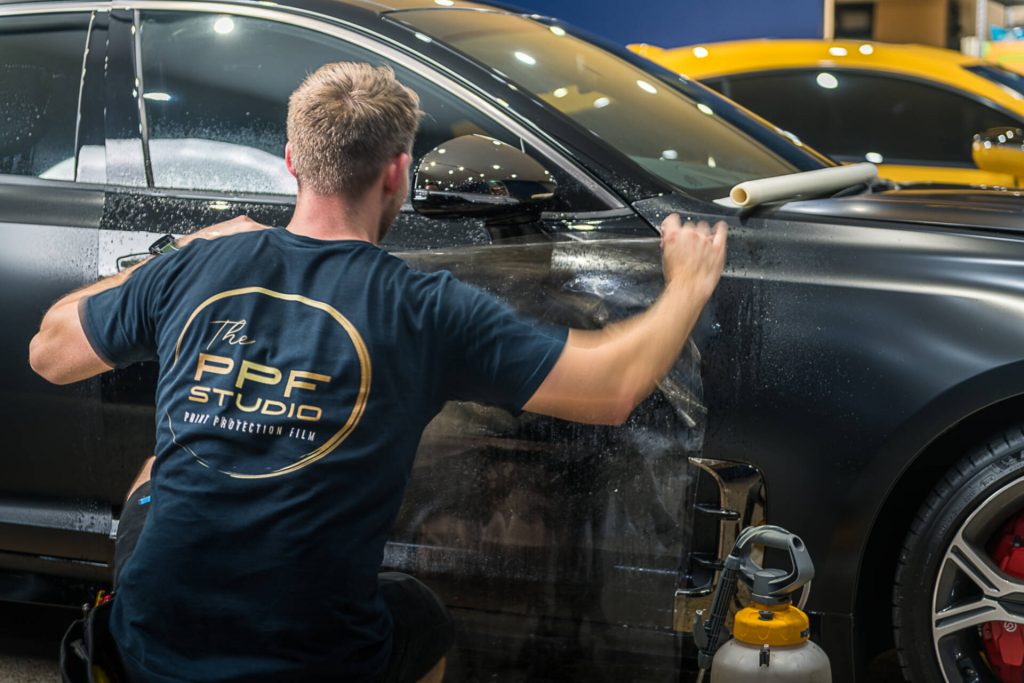
This is where Paint Protection Film (PPF) changes the equation. Think of PPF as a giant, transparent screen protector for your car’s paintwork.
When you apply PPF to a new (or freshly detailed) car, you are sealing the factory paint in a time capsule. The film takes the abuse, so the paint doesn’t have to.
Scenario A: The Unprotected Car
After three years of Sydney driving, the front bumper is rough to the touch. The bonnet has several deep chips that have started to rust slightly. The clear coat is dull. When you park it next to a new car, it looks tired.
Scenario B: The Protected Car
After three years, you decide to sell. You peel off the Paint Protection Film (or you leave it on as a selling point). Underneath, the paint is literally perfect. It looks exactly the same as the day it left the showroom floor.
- Zero stone chips.
- Zero swirl marks.
- Zero UV fading.
When a buyer sees a car in this condition, the dynamic shifts. It signals that this car hasn’t just been driven; it has been cherished. It implies that if the owner cared enough to wrap the paint, they probably serviced the engine on time too. That confidence translates directly into a higher sale price.
Investing to Save
There is often a misconception that PPF is an “expense.” In 2026, it’s more accurate to view it as an investment with a return.
Let’s talk dollars and cents. Yes, premium PPF installation costs money upfront. But when you calculate the difference in trade-in value between a “fair” condition car and an “excellent” condition car, the numbers often swing in your favour – especially for prestige vehicles or popular SUVs.
Furthermore, PPF saves you money during ownership.
- No Polishing Required: The self-healing properties mean you don’t need to pay for annual paint correction to remove swirls.
- Easier Cleaning: Most modern films are hydrophobic, meaning dirt washes off easily. You spend less time and money at the car wash.
How PPF Actually Works
If you are new to the concept, you might be wondering how a thin layer of film can stop a rock travelling at highway speeds.
Modern PPF, like the films we use at The PPF Studio, is made from advanced thermoplastic urethane. It is designed to be impact-resistant. When a stone hits the film, the energy is absorbed and dispersed by the urethane, preventing it from chipping the brittle paint underneath.
Even better, the top layer of the film is self-healing. This is the magic part. The film is technically a viscous liquid at a microscopic level. If you get fine scratches – like bush pinstripes from a weekend trip or swirl marks from a sponge – the film will rearrange itself when heated by the sun or warm water, making the scratches disappear.
It keeps the car looking glossy and new, day in and day out, without you having to lift a finger.
Why Choose The PPF Studio?
In a buyer’s market, quality wins. The same applies to who you choose to protect your asset.
Searching for PPF Sydney will give you plenty of results, but installation quality varies wildly. A poor installation can peel, yellow, or show visible lift lines, which actually hurts the look of the car.
At The PPF Studio, we treat your car like the asset it is. We are a boutique studio in Rozelle with over 12 years of experience. We don’t rush. We don’t have a production line of junior staff learning on your vehicle.
We offer bespoke packages that make financial sense for your specific situation.
- The Full Front Package: Covers the high-impact zones (bumper, bonnet, mirrors) where 90% of stone chips occur. This is often the “sweet spot” for maximising resale value without wrapping the whole car.
- The Full Wrap: For high-value vehicles where every panel needs to remain pristine.
The Bottom Line
The days of selling a used car for a profit are largely behind us. In 2026, the game is about loss prevention.
Your car is likely the second biggest asset you own, after your home. It makes sense to protect it. Whether you plan to keep your car for ten years or trade it in for the next model in three years, the condition of the paint will determine the value of that asset.
Don’t let Sydney’s roads eat away at your investment. Keep your paint perfect, keep your trade-in value high, and drive with the peace of mind that your car is protected.
Ready to protect your investment? Contact The PPF Studio today to discuss a package that fits your budget and your car.